
Best Age for Beginner Voice Lessons
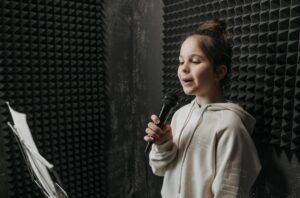 Many parents wonder: What is the best age to start voice lessons? The answer may surprise you. Unlike some instruments that can begin very early, singing develops alongside a child’s physical and emotional growth. The good news is that there’s no single “perfect” age. With the right teacher and healthy vocal approach, children can begin building musical skills earlier than many families realize. So what’s the best age for beginner voice lessons?
When Can Children Start Voice Lessons?
Most music educators agree that children can begin introductory voice lessons around ages 6–8, depending on their maturity, attention span, and interest in singing. At this stage, lessons should focus on:
- Musicality and rhythm
- Ear training
- Breathing habits
- Pitch matching
- Confidence and expression
Young singers are still developing physically, so professional instruction is important. Rather than pushing vocal power or advanced technique too early, experienced teachers guide students in a healthy, age-appropriate way.
For older children and teens, voice lessons can gradually become more technical as the voice matures. This is especially important during adolescence, when vocal changes naturally occur.
Why Starting Early Can Be Beneficial
Research consistently shows that music education supports cognitive development, memory, discipline, listening skills, and self-confidence. Singing also encourages creativity and emotional expression in a uniquely personal way.
Children who begin voice lessons early often become more comfortable performing, communicating, and working collaboratively with others. Even students who do not plan to become professional singers benefit from the confidence and discipline music study develops over time.
Every Child Develops Differently
Some children naturally love to sing from an early age, while others need more time before feeling comfortable using their voice independently. A good voice teacher recognizes these differences and adapts lessons to the individual student.
Especially, knowing that the goal of beginner voice lessons is not perfection. It is to build a healthy musical foundation while keeping students inspired and motivated.
Parents should look for signs such as:
- Interest in singing regularly
- Enjoyment of music and performance
- Willingness to follow musical instructions
Why Professional Instruction Matters
High-level music education exposes students to a wider range of musical styles and performance opportunities, helping them grow both artistically and personally.
Because the voice is part of the body, proper training is essential. Poor vocal habits developed early can become difficult to correct later. Professional voice teachers help students learn:
- Healthy vocal production
- Proper breathing techniques
- Musical interpretation
- Stage confidence
- Safe vocal development
Voice Lessons at American Music Institute
At American Music Institute students work with experienced and professional faculty who emphasize both strong musical foundations and supportive learning environments. Lessons are tailored to each student’s age, experience level, and goals, helping young singers develop healthy technique, confidence, and a lifelong appreciation for music.
Whether a child dreams of performing on stage, participating in school musicals, joining choir, or simply discovering their voice, beginner voice lessons can be an exciting and rewarding first step.